

Rosters We Remember: Tromsø
Lines that light up the logbook

It’d been a long time since I’d had to Google an airport code…
TOS?
Where’s that?
The initial disbelief hit fast - like finding a block of annual leave suddenly available in mid-August - followed immediately by the inevitable check (and double-check) of both the roster and the search results.
Excitement soared - then paused, coffee halfway to my mouth.
The. Arctic. Circle.
Fjords, blizzards, and proper Winter Ops.
My mind conjured images of the Northern Lights illuminating the skies above ice-covered runways as I stared at the snow-filled landscape dominating my screen - the kind that instantly tells you this won’t be just another line in the logbook.
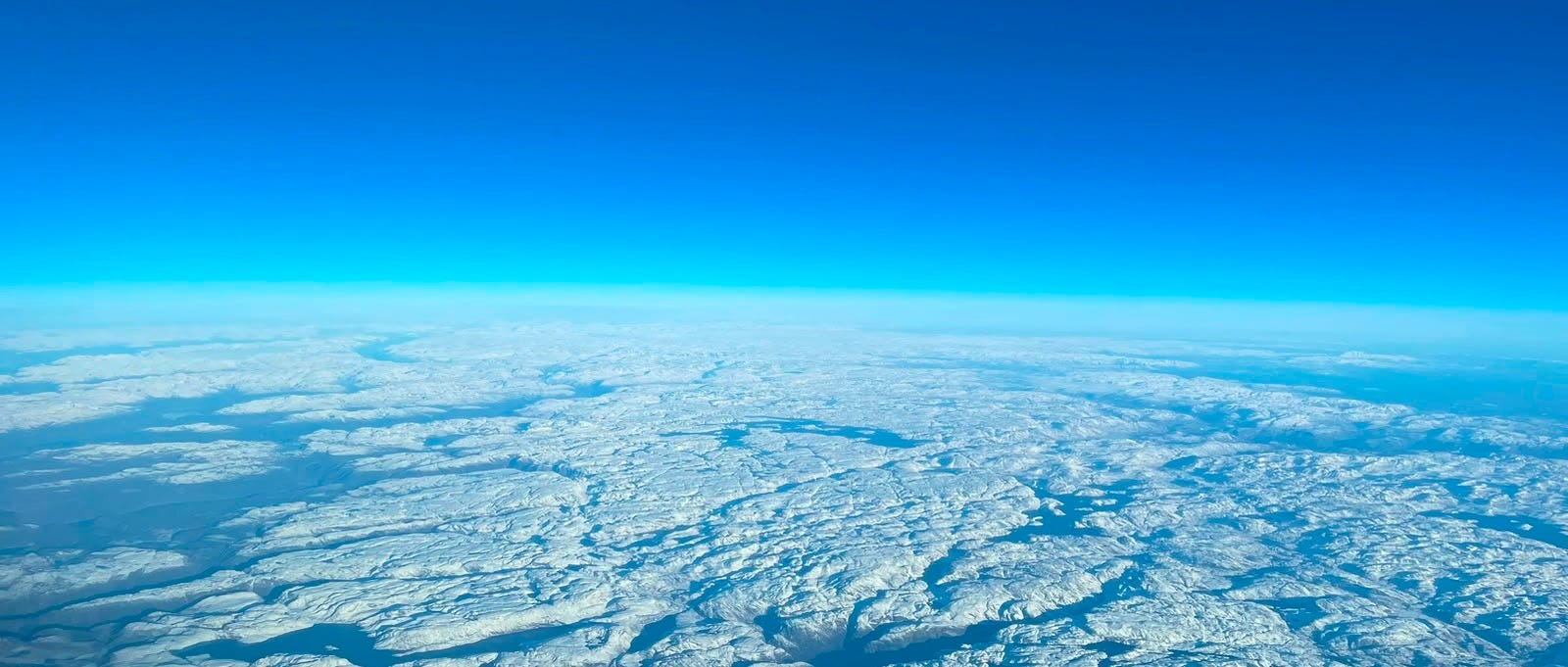
CAT C Territory
Checking the charts for the first time, it was immediately obvious: even on a CAVOK day, this would be a challenging destination.
Throw Arctic weather into the mix, and it screams CAT C.
Imposing mountainous terrain cradles the airport in a rugged fjordic valley, painting an entire canvas of threats - both on the way in and on the way out.
That’s before considering the weather.
Operating into Tromsø would clearly be no ordinary affair.
This was one of those destinations where alternates, contingencies, and performance considerations start getting serious attention the week before - rather than the morning before departure.
As the date approached, my AeroWeather app usage spiked.
I hadn’t followed a forecast this closely since the (thankfully unrealised) fear that my tropical honeymoon might be written off by a hurricane.
This article is based on the operational experience of a Two Six Left contributor who has chosen to remain anonymous.
Arctic Alternates
Monitoring the forecasts, the first thing that struck me - almost like a wobbly sun visor passing 100 knots on a rough runway - was the distance to a solid alternate outside the Arctic environment.
The winter weather systems were widespread, rapidly changing, and packing a punch - carrying the potential for sudden snowfall and serious gusts across the region.
That distance really hit home when I checked the Tromsø METAR the day before departure:
25035G55KT 0700 SHSNGS OVC007CB M03/M03 Q0996
And the nearest airport that wasn’t forecasting similar chaos?
Two hours away.
Contamination Calculations
Morning soon came, and with it the standard post-breakfast flight plan review - that quiet moment where planning begins to meet reality.
And unsurprisingly, the TAF was painting a by now familiar (and snowy) picture.
There was, however, a brief window where the weather was forecast to be (just about) within limits - good news.
But with extra fuel required for a long-distance alternate and the likelihood of holding, performance margins on the severely contaminated runway were already prompting some serious head scratching.
Boarding was about to begin by the time we finally had the confirmed load figures - the jet bridge already a sea of Helly Hansen jackets.
We ran the final numbers... then ran them again.
Fuel was nudged, checked, nudged again.
Each small change carried weight - literally - and with it, consequences.
In the end, we had the margins.
But only just.
Enough fuel for our long-distance alternate, plus potential Arctic weather curveballs or runway clearing delays.
Enough performance to make it work…
…Close enough to remind us that today’s decisions weren’t abstract exercises in the classroom, but real-world decisions that would follow us all the way to the runway.
Sunrise #1
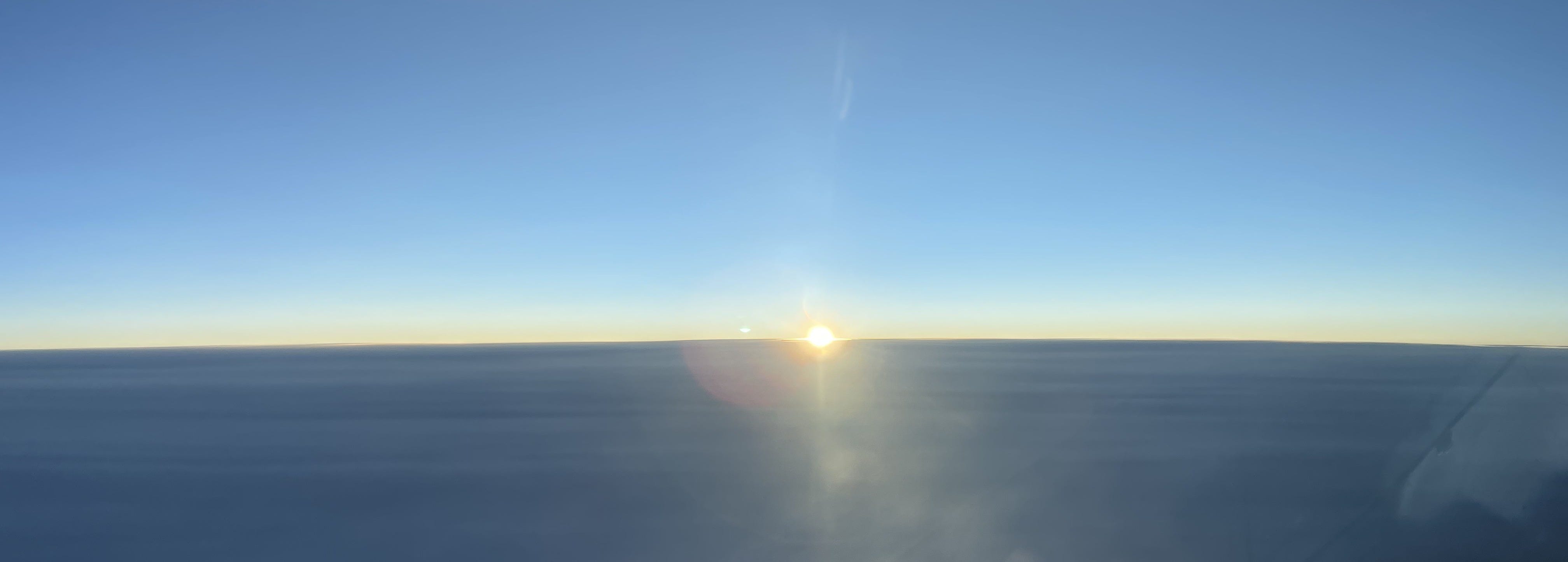
So with gusty crosswinds and heavy snow on the forecast, we departed base as the sun rose behind thick winter cloud - a quick glance down eliciting the quiet reassurance that, in the circumstances, only a sensible FMS fuel prediction can provide.
By the time we finally broke through the last stratus layer into sunglasses territory, our minds were already turning back to the Arctic challenge ahead.
“What do you think - cruise coffee and a chat about Tromsø before we get busy?”
Our arrival briefing today would begin long before the Top of Descent indication appeared on the Nav Display.
Sudden Snowfall
The further north we progressed, the more the Arctic world below began to resemble a lunar landscape.
Frosted peaks rose above a mirror-like sea, with rolling mounds of snow stretching as far as the eye could see - each adding to the growing sense of remoteness.
That feeling of otherworldly isolation sharpened again as we entered the realm of the Polar Night, the sun dipping back below the horizon and leaving the world below suspended in an unfamiliar half-light.
Passing through FL240, we heard the aircraft ahead return to frequency following a go-around.
My colleague immediately copied the ATIS as it refreshed - his facial expression as he did suggesting that if this update were a letter from the taxman, it would arrive in a big ominous brown envelope.
Just as the unwelcome news was shared - sudden heavy snowfall reducing visibility below limits - we heard ATC instruct the aircraft ahead to hold.
My hand was already on the dials, easing the speed back and prompting a level off, when ATC beat us to it:
“Take up the hold - runway temporarily closed, due snow”
Having briefed - read: extensively war-gamed - our options, we already knew exactly how long we could wait before committing to a diversion.
The latest weather at our alternates were reassessed in earnest - and just as we refined our Plan B (and C), we were relieved to hear that the snow shower had eased.
With our focus quickly shifting to how long it might take to clear the runway, we were given a brief lesson in Nordic efficiency:
“Runway clearing in progress and should be complete within a few minutes – descend FL100”
Steep Mountains. Steep Approaches.
The sense of relief - unlike the recent snowfall - didn’t have a chance to settle as our focus shifted straight to the next challenge.
We ran a quick performance review, confirmed the numbers were still valid, rapidly refreshed go-around contingency plans, and commenced our approach - a 4-degree path to a short, snowy touchdown zone.
Needless to say, a steep final approach to a slippery snow-covered runway is definitely one of the bigger ‘attention sharpeners’ of life in the Flight Levels.
But in the end - after all the threat management plans in our briefing - the approach itself was relatively calm.
As the old adage goes: Plan for the worst. Hope for the best.
The forecast window had opened as promised, and we touched down into a stunning white winter wonderland.
Polar Night Snowglobe
Arriving on stand, I’ve rarely been more aware of the exact moment the aircraft door was opened.
One second the Flight Deck was a warm cocoon shielding us from the snowglobe-like world outside; the next, it was filled with an unrelenting blast of icy Arctic air that instantly reinforced exactly where we were.
By the time our passengers had finished disembarking, it was already pitch black.
I was struggling to adjust to the idea that it was still early afternoon local time when I realised it was once again snowing.
Just as our attention had turned to deicing procedures and turnaround coffee, word began to filter through that the runway had closed again - the second time in the space of an hour.
A glance outside suggested someone had shaken the snowglobe. Vigorously.
The visibility plummeted: 1600m… 800m… 400m…
And galley chatter pivoted from turnaround tasks to suitable clothing for an Arctic nightstop.
With the incessant hum of the packs morphing into a deeper drone - no doubt a symptom of their icy battle to hold the cabin temperature - we settled into a familiar rhythm: reviewing FDP limits, contamination calculations, and deicing dilemmas.
It had become another waiting game.
But fuelled with optimism, coffee and a renewed respect for just how quickly the weather in this part of the world can change, we hoped for another weather window.
Then, as our attention shifted between the clock, ATIS and the world outside, it arrived.
The snowfall eased.
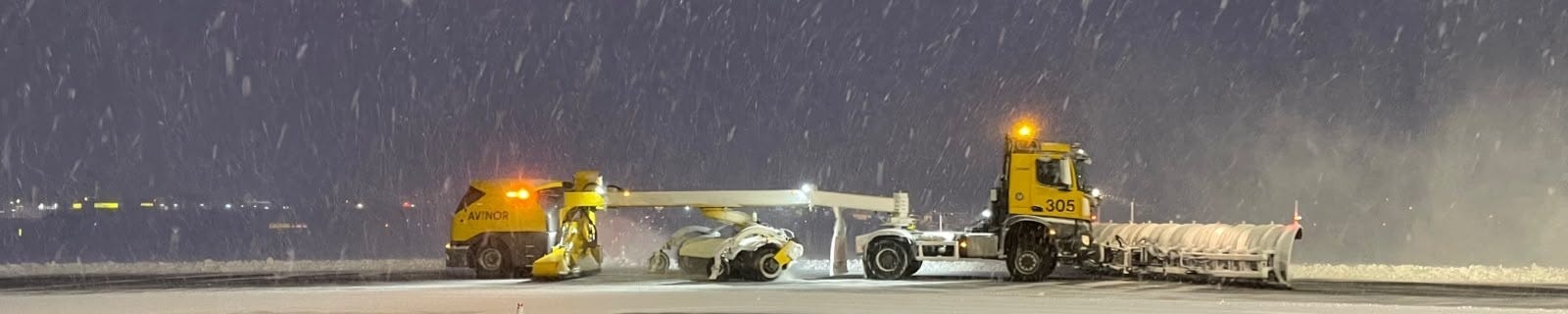
And almost as quickly as the visibility had tumbled, it now rapidly increased - revealing a fleet of yellow snow-ploughs ready to roar into action.
For the second time in as many hours, a deluge of snow was cleared from a two-kilometre runway in less time than it takes to clean the daily avalanche found beneath a toddler’s high chair - and less time than it took us to board.
The Slippery Question
A much lighter load for the return sector meant performance wasn’t quite so tight - even with the steep climb gradient - but the icy runway still kept the decision making interesting.
We just about had the performance for an intersection departure - avoiding the threats associated with a backtrack and slippery 180°.
But the intersection would see us starting our take-off roll with 400m already behind us.
What followed was one of those discussions that never really appears in the manuals, yet instantly feels familiar to anyone flying the line.
On paper (well, tablet screens) the performance was there, but from our recent arrival we knew just how slippery the runway was.
Equally, during run-ups the struggling brakes felt more suggestion than certainty.
The idea of backtracking - then accurately turning (not skiing) through a constrained 180° - carried its own very real risks.
And so the conversation settled into that familiar territory of managing the grey.
Using the intersection would neatly avoid the backtrack altogether, removing the threat of sliding where precision mattered most.
But it also meant accepting that a few hundred metres of runway would sit uselessly behind us - runway that, in a high-speed stop scenario, we’d risk wishing was still in front, rather than behind us.
The figures said the intersection was achievable.
Experience quietly asked how close, on this very real, very wintery runway, we really want to be to “demonstrated” performance.
Out of ‘the grey’ we weighed likelihood against consequence, and tried - as we always do - to understand and manage the risks in front of us.
Looking for the option that provides the greatest margin where it matters most and leaving as little as possible to optimism.
Sunrise #2
Decisions and de-icing complete - including a brief cameo from the biggest hairdryer (or, fan blade icing remover) I’d ever seen - we were finally ready to depart Tromsø.
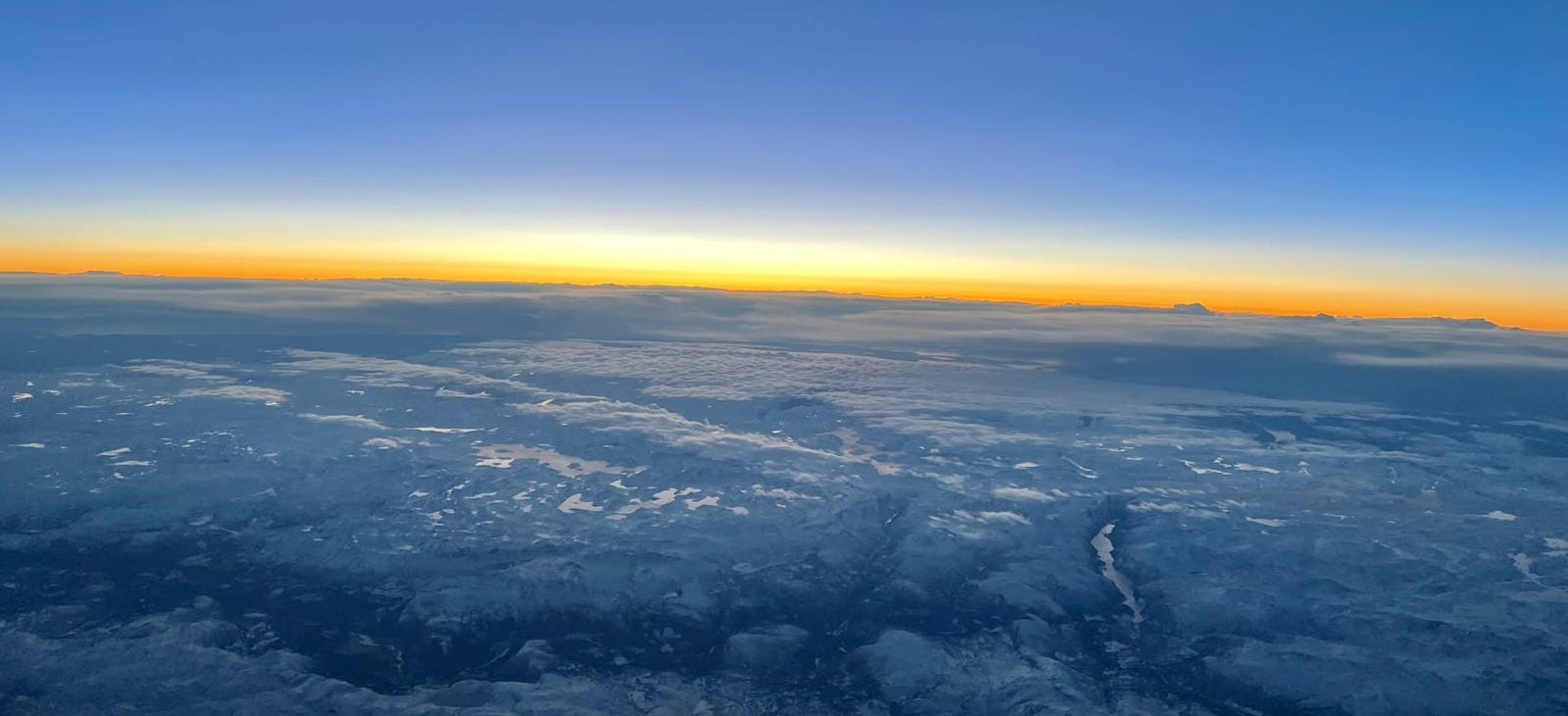
Leaving the picture-postcard winter landscape behind, we climbed back above the sprawling Fjords, and found ourselves slipping once again into an eerie Arctic twilight.
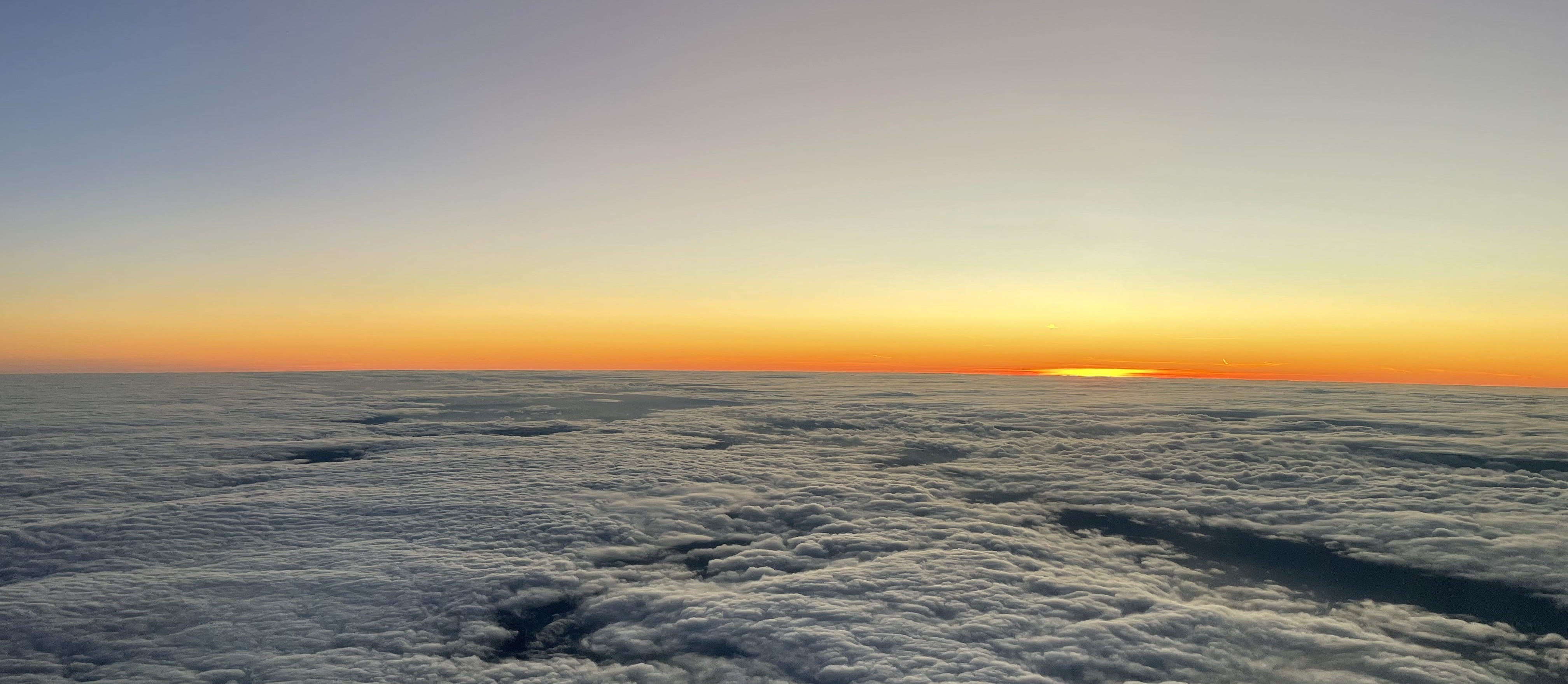
Eventually, somewhere above the clouds, the sun began to rise.
It was one of those subtle, unceremonious moments - creeping up inconspicuously, before the significance suddenly begins to resonate.
One of those moments that quietly reminds us why, all those years ago, we looked up at aeroplanes with childlike wonder and thought: that.
An ordinary sunrise.
From an extraordinary vantage point - that meant for us, it was the second of the day.
—
Two Six Left
Have a story to tell?
Do you have a particularly memorable line from your logbook?
Or an insight shaped by real-world flying - whether reflective, technical, or operational, that would resonate with fellow professional pilots?
If your idea aligns with the Two Six Left ethos, we’d love to hear from you.
Whether it’s a finished draft, a rough outline, or simply a story waiting to be told, we can help shape, edit or ghostwrite your story.
editor@twosixleft.com
Know someone who’d enjoy this?
Tell them where to land: