

Two Six Left: Issue #1
May 2026

This month’s issue explores two ends of the spectrum of life in the flight levels.
A reflective feature considers the views we’re privileged to experience every day - and whether they begin to fade into the background as routine takes hold.
Alongside it, the first instalment of Tech Stop explores a potential subtle threat associated with Airbus Groundspeed Mini - where a well-intentioned pilot intervention can quietly remove a key layer of protection.
In this issue:
The View Never Gets Old…Does It?
When the cockpit is the office, it’s normal the wallpaper feels familiar
Tech Stop #1
Groundspeed Mini: The Gusty Gotcha

The View Never Gets Old…Does It?
When the cockpit is the office, it’s normal the wallpaper feels familiar
The thing about becoming acclimatised to the beauty of seeing the world from 37,000 feet is that it rarely happens quickly.
It’s the kind of change that moves at a glacial pace - so stealthy and subtly slow, you barely notice it.
Which, if you actually stop and think about it, makes perfect sense.
It’s one of those inevitable truths, right?
Like slots in summer, or the difficulty downloading December’s roster.
But at FL370, when the gorgeous glowing sunset is part of the shift, the truth is we don’t tend to stop and think about it…
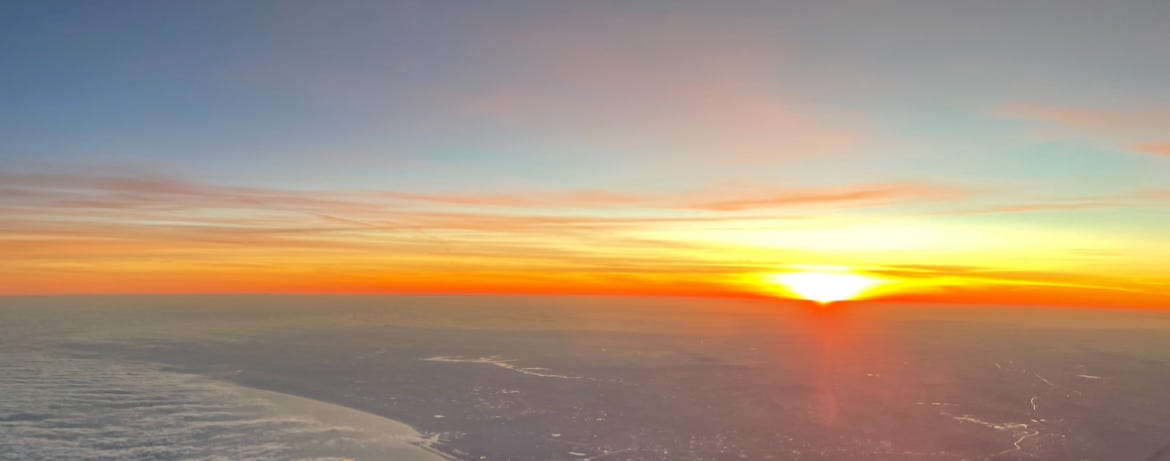
The Best Office Window in the World
During the slow shuffle of a recent disembarkation, a passenger paused to compliment my “smooth landing” - my colleague’s handiwork - before mentioning how beautiful the view had been cruising along the Croatian coast.
“I bet that view never gets old!”
The comment instantly jarred.
Even as we traded smiles - and acknowledged the crazy privilege of having the best office window in the world - my mind was already spinning, trying to remember if I’d even glanced along the coastline.
Unlike our recent smooth landing, the realisation hit hard.
Those stunning views are one of my favourite perks of the job - one of the first things people always ask about - and something I never imagined I’d even begin to take for granted.
The more I thought about it, the more it bothered me - like insects hovering around Pitot tubes.
That evening I found myself racking my brains and replaying the sector like an FDM trace, wondering whether I’d genuinely stopped registering one of the very things that made me want to fly in the first place.
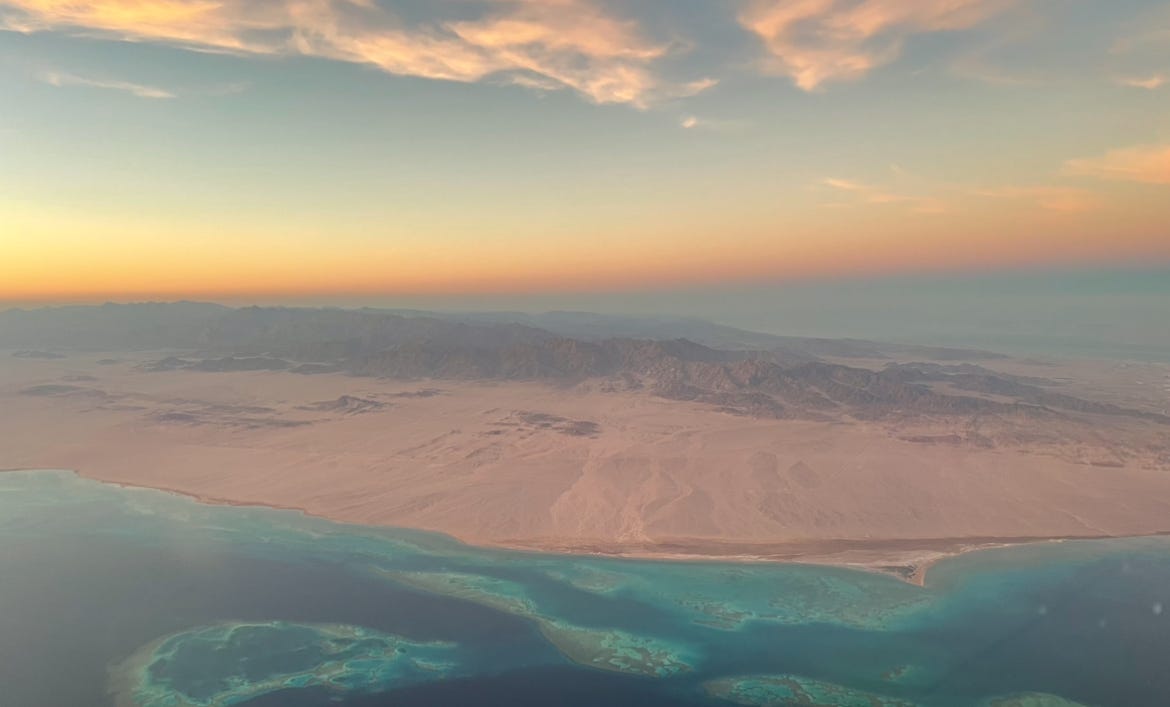
A Postcard from 37,000 Feet
As my mind wandered, I smiled as I recalled my very first week observing from the jumpseat - the wide-eyed wonder and slightly disbelieving awe of having a bird’s-eye view of the world.
Every day brought a new landscape - a fresh canvas of colour - and a new reason to take yet another photo.
My photo album that first week could’ve produced a postcard per sector.
A collage of snow-topped mountains, smoking volcanoes, glistening coral reefs - and those burnt-orange sunsets that felt custom-made for cockpit windows: each one beginning with bursts of sea blues and fiery yellows, and ending with the sense I’d never seen better.
Still sitting, smiling, I realised that when I do stop to look, the sense of awe and wonder is just as strong as it was all those years ago.
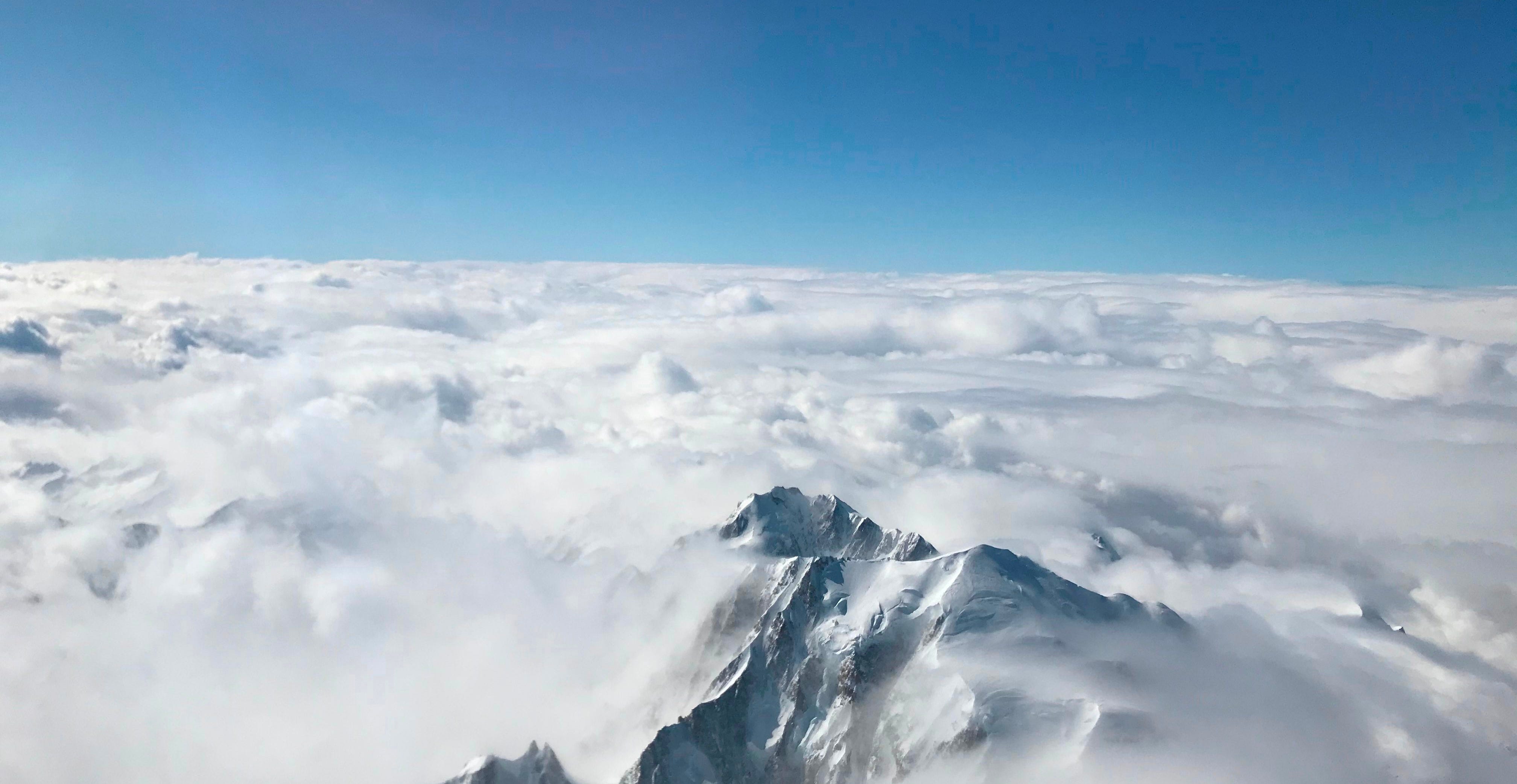
Everyday Awe
But here’s the thing…
Sometimes we simply don’t pause to look.
The views are still spectacular - they don’t lose their magic - far from it.
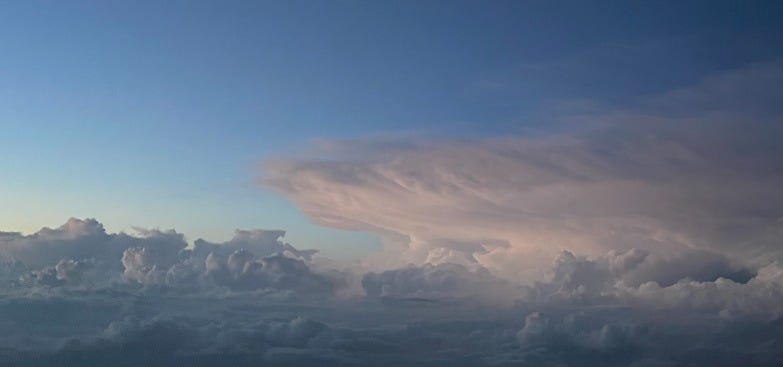
The Alps still protrude dramatically through an enormous blanket of cloud.
Volcanic islands still pierce vast glistening blue seas.
And dark nights still regularly reveal twinkling constellations that look close enough to touch.
But amidst the flying, monitoring, radios, calculations, briefings - and all the other regular Flight Deck routines - our attention is often rightly focussed elsewhere.
And that’s ok. It’s normal.
The SOPs of the job slowly settle into routine, even if the views are anything but.
Perhaps it’s not so much the views themselves we subconsciously get used to - but the subtle privilege of knowing they’ll be there tomorrow.
It’s probably inevitable that by the time we’re scribbling into our third logbook, we no longer spend every spare second of cruise downtime soaking up the panoramas the way we did when the ink was still fresh in the first.
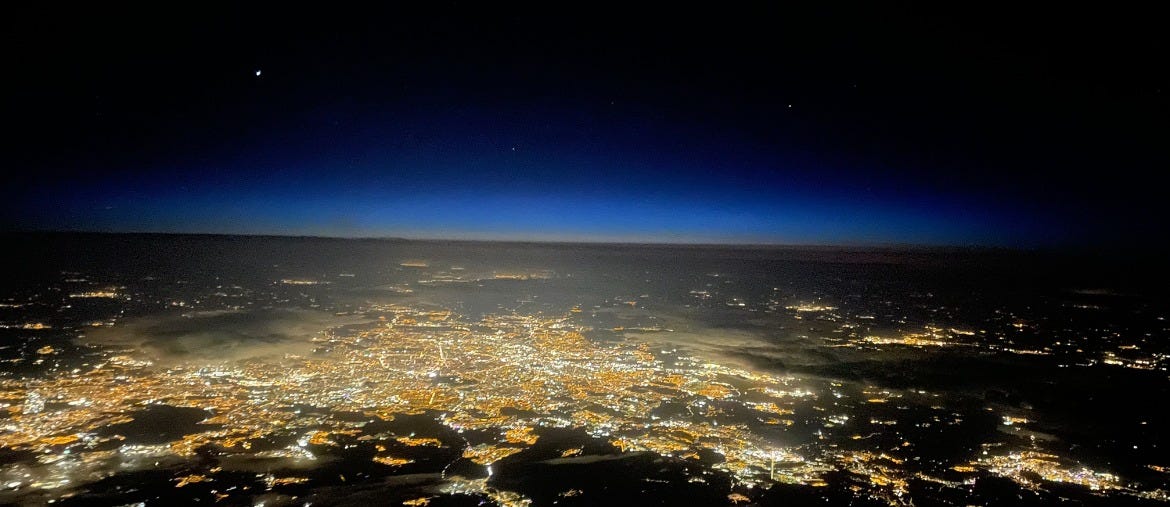
The Views That Remind Us Why We Started
But even so - even if we miss the occasional stunning coastline - extraordinary moments still punctuate the routine with refreshing regularity.
A flash of the Aurora on the way to Scandinavia…
Etna billowing smoke and leaking lava after a block of leave…
Or simply observing the quiet “wow” of a new colleague catching their first sunrise over snow-capped mountains.
And in those fleeting moments, the cockpit window quietly reminds us why we began this journey.
That we are part of a remarkably small group of humans who get to regularly glimpse our planet from this extraordinary vantage point.
After countless flights, the office wallpaper may feel familiar - but it is anything but ordinary.
An enduring wonder, just quietly waiting for the times we pause to look.
—
Tech Stop #1 - Groundspeed Mini: The Gusty Gotcha
Real-world tech tips
“Groundspeed Mini’s doing its thing!”
I sometimes wonder if that phrase has quietly snuck into the Ops Manual as a standard callout…
If you’re in the flight deck of an Airbus on a gusty day, chances are you’ll hear some variation of:
“Gear Down, Managed Speed… Groundspeed Mini’s doing its thing!”
But while we’re quick to gratefully acknowledge the protection GS Mini offers - we don’t often talk about the real-world threat we can unwittingly introduce through a common misunderstanding.
Airbus vs Windshear
While Groundspeed Mini serves as a cornerstone of the Airbus windshear protection strategy, its innovative - read: seriously smart - approach can occasionally mask its real-world logic in the heat of the moment.
Ask an Airbus pilot for a 30-second explanation of Groundspeed Mini and - after the initial startle - you’ll likely get a brief summary of a clever system designed to protect aircraft energy on approach.
Most of us will also recall a fair bit of initial head-scratching when first introduced to the somewhat counterintuitive way the system achieves that goal.
The Disappearing Safety Net
Part of the system’s brilliance lies in how seamlessly it integrates into normal ops.
It’s just there - quietly doing “its thing” - diligently providing protection in the background.
As with that initial head-scratching though, it’s easy to fall into a common trap that likely stems from such slick integration.
While most of us understand the system’s overall aim - maintaining aircraft energy above a set minimum - the fact that this value isn’t actually displayed can understandably cause confusion.
On gusty approaches, when we’re used to seeing Vapp constantly edging up and down - seemingly jousting with an invisible foe - the maximum speed limit is always clear.
But the minimum energy value? Not so much.
From Magenta to Blue: Where the Trap Begins
We know that in theory, flying an approach in managed speed - as Airbus intended - that hidden GS Mini value isn’t a problem.
The system intelligently manages aircraft energy, and there’s no need to display the exact margin - it’s already built in.
But on the line?
We also know that in very turbulent, gusty conditions, managed speed can increase the risk of a flap overspeed.
To avoid this threat, when the wind is particularly strong and unpredictable, many of us intervene with selected speed to prevent edging too close to VFE.
The unintended consequence?
In attempting to avoid one threat, we subtly open the door to another - bigger - risk.
The moment the speed bug changes from magenta to blue, Groundspeed Mini disengages - and so does the automatic energy protection it provides.
Groundspeed Mini is no longer “doing its thing”.

The Gusty Gotcha
Suddenly, in selected speed - with a crucial layer of our windshear defence disabled - the lack of a clearly displayed minimum energy value becomes a lot more relevant.
And this is where the most common Groundspeed Mini misconception comes into play:
The belief that simply selecting any speed above the final Vapp will maintain aircraft energy above the minimum required threshold.
In the heat of battle, how many times have you seen someone pull 150 knots and wondered:
Is that a default or a considered selection?
150 knots feels safe – it’s fast. It’s familiar. It feels like a safe buffer – but is it considered or default?
But as we know, GS Mini doesn’t command just any speed above Vapp.
It calculates a wind-dependent margin - a layer of protection in case the headwind suddenly drops off on short final.
If we don’t also include an appropriate buffer - and monitor our energy - we could easily, and unknowingly, select a speed that takes the aircraft into a low energy state.
Exactly the scenario Groundspeed Mini is designed to prevent.
So how do we dodge the Gusty Gotcha?
It’s all about maintaining situational awareness.
Groundspeed Mini isn’t just a clever bit of automation - it’s an active protection, dynamically managing energy margins in challenging conditions.
If we do plan to intervene with selected speed:
We need to be aware that we’re removing that protection - and that puts the ball firmly in our court to actively manage our energy.
Having an idea of our GS Mini value in advance can help raise awareness, but the real goal is staying alert to the buffer the system was providing, and restoring protection as soon as practical by briefing a clear gate to return to managed.
And while the speed is selected?
Monitoring changing wind and groundspeed helps ensure any selection is based on a real margin - not an educated guess.
Pragmatism from the Pointy End
Managing risk priorities with Groundspeed Mini on the line
Risk Priorities
A small flap overspeed rarely ruins our week.
A low-energy state on final, in gusty conditions? That’s the real threat.
Speed Stability vs Energy Protection
A blue bug comfortably between Vapp and VFE might look more reassuring…
But our energy margin could be quietly eroding unless we’ve included a margin for potential headwind loss - just as GS Mini would.
Planning the Intervention
Having a plan for when to intervene, how to monitor it, and briefing the latest point to return to managed, helps us maintain SA.
And if workload spikes - returning to managed quickly restores automatic energy protection.
—
Two Six Left — Issue #1
Know someone who’d enjoy this?
Tell them where to land: