

Two Six Left: Issue #2
June 2026

June’s instalment of Two Six Left shines a light on two often-overlooked aspects of life above the clouds.
A reflective feature considers the many forms of waiting woven into a profession built around movement - from the quiet suspense of standby to the familiar circles of an arrival hold.
Plus, the first instalment of our Icing on the Cake series examines a simple technique for turning those vaguely foggy “I could’ve done that better” moments into something far more constructive.
In this issue:
Waiting in the Wings
For a job defined by movement, we spend a surprising amount of time waiting...
The Icing on the Cake #1
The Art of the Self-Debrief

Waiting in the Wings
For a job defined by movement, we spend a surprising amount of time waiting...
Just like the commonly held belief that every trip means a week lounging on a palm-lined, sun-drenched beach - where do I send my CV?! - this idea sits comfortably among the biggest misconceptions about pilot life.
People are often surprised that our regular bursts of near-supersonic motion are generally bookended by significant spells of… well, not actually going anywhere.
The stereotype says we’re always on the move.
Always going somewhere.
Yet outside the industry it seems there is little sense of just how much of our time is spent simply ready - and waiting - to go somewhere.
And as we know, it’s not just one type of waiting, either.
We inhabit a realm formed around a framework of different kinds of waits: some short and sharp, others slow and sprawling - each with its own distinct flavour.
In fact, enough flavours to rival an Italian gelateria...
There are the focused kind: primed and poised like a coiled spring - at the holding point, listening intently for clearance to release the brakes.
Then there’s the limbo kind: with standbys spent constantly eyeing the company phone as if it were a venomous snake waiting to strike…
And countless other varieties in between.
The stillness varies, but the pattern is familiar.
Movement, wait.
Clearance, hold.
Start, pause.
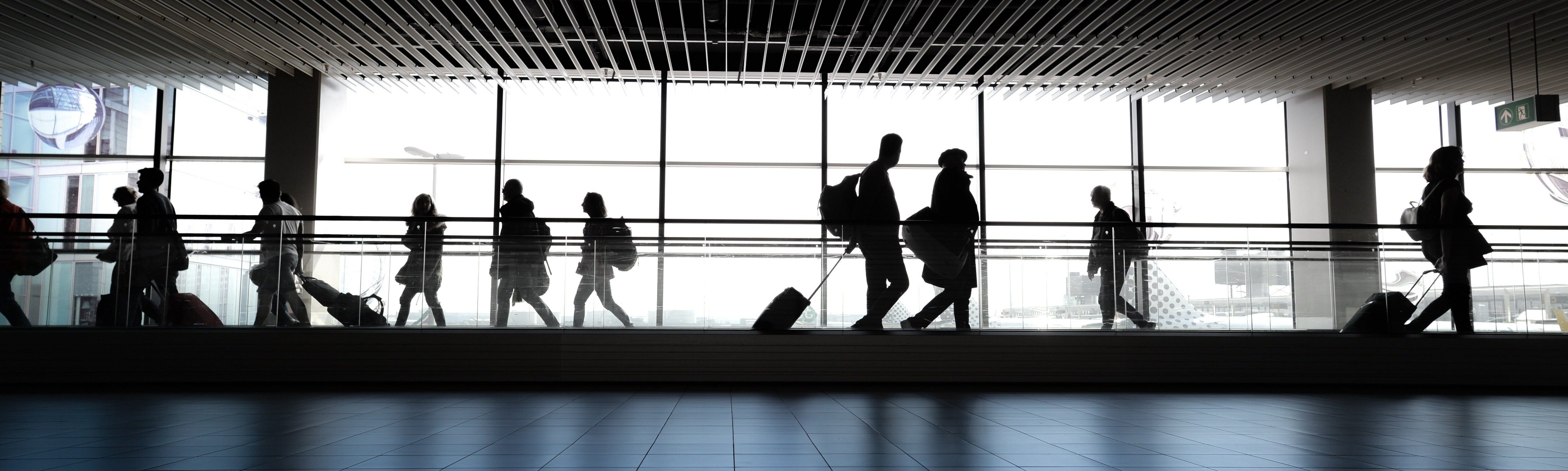
Aircraft arriving in: 01hrs 47mins
Some of the longest - and at times most bizarre - pauses are the ones that can occur before we even board.
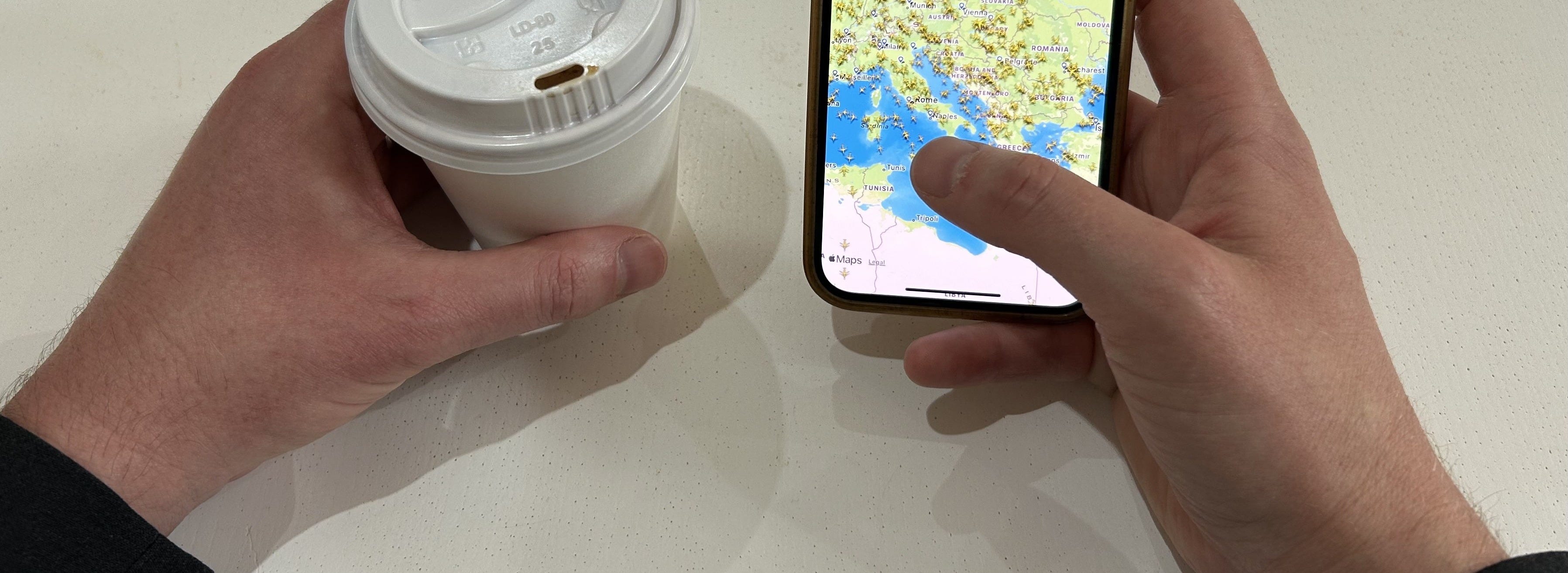
Waiting around the terminal for a delayed aircraft to arrive: coffee in one hand, FlightRadar24 in the other - intently willing that little yellow aircraft-shaped blob to inch a little closer.
I mean, how surreal is that?
In what other profession do you rush to arrive at work on time... only to end up waiting to even begin?
A strange little cocktail of sensations ensues:
Mix two-thirds adrenaline-sapping pause with one-third of that familiar sinking sense that the day is already beginning to stretch far beyond schedule - and garnish it all with the knowledge that relaxing airside is impossible when your uniform becomes a magnet for the gaze of every frustrated passenger in the vicinity.
There’s even poetic irony in the fact that this enforced pause generally comes right at the start of our day, conjuring images of pilots raring to go but held in place - the aviation equivalent of those old cartoon characters running on the spot.
My phone is on loud, right?
At least with a home standby there’s sometimes a chance - or at least half a chance - the wait might not be quite so energy-sapping.
In many ways though, it can prove even more stressful - aviation’s own version of roulette - waiting for a notification to determine the day’s destiny.
Not quite “working”, but definitely not “off-duty” either - just suspended in that strange land of limbo, where your heart skips a beat every time your phone lights up.
That phone.
That has the power to wreak havoc at any moment - the next buzz fully capable of derailing plans and leaving your upcoming roster in more of a mess than the cabin after a late-night Ibiza.
Or maybe not…
There’s always the chance of winning standby roulette, of course - but only after you’ve checked (and double-checked) your device twenty times, scrutinised the weather twice as often, and imagined every conceivable call-out scenario.
Standby really is a unique kind of limbo… ready and waiting in suspense, while life carries on around you.
Family and friends go about their day, the café empties and refills, and the hours march by - all while any tasks undertaken (or, let’s say, risked…) have to be planned with the uniform close by, knowing that everything might have to be instantly dropped at a moment’s notice.
We’re ready to go, but…
And if the call does come, the suspended limbo of home standby gives way to the more tangible suspense of being on board - where the waits don’t magically disappear - they just take on another flavour.
Waiting on stand for an ATC slot, or for some essential service, suddenly becomes a very public affair.
A sea of passengers watching, sometimes intently, sometimes with the patience of saints, sometimes… not.
These are a busy kind of wait: juggling passenger communication, updating the company, liaising with ATC, checking the status of ground services, and somehow trying to keep your own sense of calm intact.
Every minute stretches a little longer when the engines are off and the clock ticks towards the next clearance.
Announcements are made.
Questions are answered.
Occasional groans are heard.
We explain why the aircraft is still stationary and offer the honest reminder that we, the crew, are just as eager - and waiting - to get going.
It’s a very different kind of limbo: far removed from the quiet suspense of home standby, instead this is more of a hands-on, everyone’s-watching-you-work sort of pause.
Still, there’s a rhythm to it - a delicate dance of communication, coordination, and gentle nudges to keep the operation moving forward.
Hold at the fix, expected delay 28 minutes
And of course, even after getting airborne - and racing towards our destination at nine miles per minute - our world of waits still has another potential flavour before landing.
Arrival holds are a funny thing: we’re quite obviously still moving, carving elegant racetracks in the sky… yet in the geographical sense, we’ve been placed on pause.
It’s waiting, but with lift.
If a wait on stand is a busy pause requiring a constant balance of coordination and communication, the arrival delay is a higher-stakes kind of wait - one that demands the calm focus of a Jedi juggling fuel, weather and alternate considerations.
It’s a curious form of waiting - whilst our position may be paused, our minds are anything but.
The flight deck becomes a quiet brainstorm of predictions and projections, calculations and contingencies, as we assess our position in the giant game of aviation Tetris unfolding in the sky around us.

Leave the hold, proceed direct…
Eventually though, just like the standby limbo and the waits on stand - every pause comes to an end - and we trade tracing circles in the sky for the beckoning runway lights ahead.
The myriad of waits, delays and holds woven into our world are arguably as defining a feature of our day as the bursts of near-supersonic motion.
Moments of high-stakes intensity framed by the stretches of stillness.
The waits, it turns out, are stitched into the very fabric of the profession.
Aviation teaches patience long before it teaches landings.
From waiting for the right weather for first lessons, to treading water in a recruitment hold pool, all the way through to awaiting an upgrade opportunity, hoping your number is next.
Waiting, it seems, isn’t the space between flying; it’s up there with lift and drag.
In the end, perhaps waiting isn’t the opposite of flying at all - maybe it’s what gives the movement meaning.
—
Missed Issue #1?

The Icing on the Cake #1 - The Art of the Self-Debrief
Tiny tweaks. Big difference.
Like those pragmatic pearls of wisdom shared by an experienced colleague in the cruise, this series brings together small, easily actionable ideas that subtly elevate life in the flight levels.
The icing on the cake stuff - and maybe, just maybe, even a cherry on top…
Aside from probably knowing more Top Gun quotes than we’d ever care to admit (“Tower, this is Ghost Rider…”) there’s another near certainty that unites most of us:
Somewhere along the way, we’ve all stepped off an aircraft thinking, I could’ve done that better.
Nothing dramatic.
We’re not talking a flurry of ASRs.
Just one of those small moments - a landing, an approach, a decision - that lingers a little longer than it should.
And more often than not, our vague internal debrief probably ends with something like:
“Yeah, bit firm.”
“Got slightly high.”
“In hindsight, not the best option.”
It does feel like a bit of a debrief…
But in reality?
It’s probably not enough to shake that sinking feeling - let alone actually move us forward.

(De)Brief Learning
Formal debriefs are something of a luxury - even if it takes most of us a while to realise that.
In the training environment, a good instructor will slow things down, separate cause from effect, and help translate outcomes into something useful.
On the line though?
Generally the only real flavour of debrief available is informal and internal.
A quiet replay in the cruise.
A thought on the taxi in.
A half-sentence on the walk to the car park.
Maybe a few more thoughts on the drive home.
And for a lot of us, most of those internal replays come with a mildly self-critical commentary running in the background.
It’s part of our makeup that strives to keep standards high - but without a little direction, that same instinct can quietly work against us.
We get frustrated replaying what happened…
…but sometimes forget to pause to define why.
WANT to sharpen the reflection?
A colleague a few more logbooks down the line, once framed it in a simple way - one that has a nice habit of turning those quietly frustrating moments into something genuinely useful.
The small shift?
Simply noticing - and keeping separate - three things we sometimes allow to blur together:
• What actually happened
• What specific action (or inaction) caused it
• What we’ll do differently next time
That’s it.
A subtle mental shift - from outcome… to cause… to adjustment.
Since then, in my head, it’s been WANT:
W – What actually happened
“Firm touchdown / low flare”
A – The Action (or inaction) that caused it
“Fixated on aiming point; transferred gaze too late to assess closure rate”
NT – Next Time
“Transfer gaze away from aiming point before crossing threshold”
Same event.
Very different debrief.

Making it constructive
So why does this small shift work?
Not because it removes the commentary - but because it makes it specific.
“Bit firm” is a judgement of outcome.
“Low flare because I didn’t transfer my gaze early enough” is usable information.
If there’s such a thing as the right stuff of information - this is it.
Because this sort of information is constructive and easily translates into something actionable going forward.
A simple way to generate useful feedback when there’s no instructor, no sim pause button, and no formal debrief coming our way.
The Icing on the Cake Stuff
Most of us are already doing some version of this - just maybe not quite as deliberately as we could.
It’s nothing more than viewing the replay in our head from a slightly different perspective.
Shifting the focus from what to why, and from frustration to something genuinely useful.
A small shift.
A far more constructive takeaway.
—
Two Six Left — Issue #2